
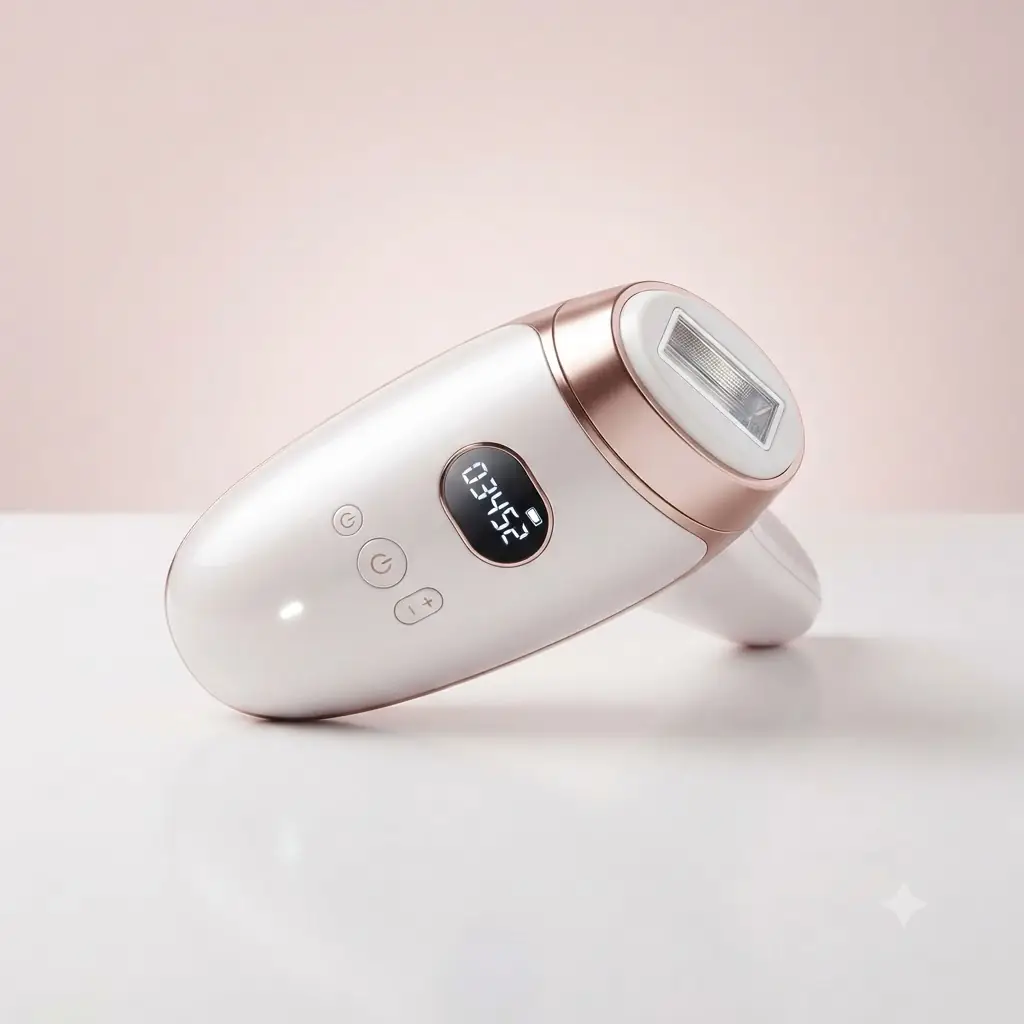
IPL vs laser hair removal comes down to how each one uses light and where you use it. Both IPL and laser reduce hair by targeting the pigment in the follicle with light energy, but IPL uses broad-spectrum light and shines as an affordable at-home option, while laser uses a single concentrated wavelength, is usually done in-clinic, and suits a wider range of skin tones. Quick verdict: if you have lighter-to-medium skin with dark hair and you want affordability, privacy and convenience, at-home IPL is an excellent choice; if you have darker skin or want the fastest, strongest professional results and have the budget, in-clinic laser is worth considering. The right choice depends on your skin, budget and goals.
Key takeaway: IPL and laser both give long-term hair reduction, not guaranteed permanent removal. IPL is the affordable at-home path for Fitzpatrick I–IV skin with dark hair. Laser is the stronger in-clinic route and, with Nd:YAG, the safer option for darker skin.
Quick verdict: at-home IPL vs in-clinic laser at a glance
Here is an honest side-by-side comparison of the two most popular light-based hair removal methods. Neither is a magic wand, and both work best on dark hair against lighter skin.
| At-home IPL | In-clinic laser | |
|---|---|---|
| How it works | Broad-spectrum pulsed light (many wavelengths) | Single concentrated wavelength of laser light |
| Where you do it | At home, on your own schedule | In a clinic, by appointment with a trained operator |
| Typical cost | One-time device, reusable by the household | Often ~200 to 400 dollars per session; can total well over a thousand dollars |
| Sessions needed | Regular use over several weeks, then maintenance | Commonly 6 to 8+ sessions, plus maintenance |
| Best skin tones | Fitzpatrick I–IV (light to medium) | Wider range; Nd:YAG can treat darker skin (V–VI) safely |
| Best hair colours | Dark brown to black | Dark brown to black |
| Pain | Gentler per pulse; cooling improves comfort | Can feel sharper per pulse, but quick per area |
| Permanence | Long-term reduction, not permanent | Long-term reduction, not guaranteed permanent |
| Convenience | Private, no travel, on your schedule | Requires booking and travelling to appointments |
How each technology works
Both methods rely on the same core principle: light energy is absorbed by the melanin (pigment) in the hair, converts to heat, and disrupts the follicle so it produces less hair over time. The big difference is the kind of light each one emits.
IPL (Intense Pulsed Light) uses broad-spectrum light — a range of many wavelengths released in pulses, similar to a specialised flash of light. Because the energy is spread across multiple wavelengths, it covers a wider area per flash, which makes it well suited to larger zones like legs and arms and to at-home devices. If you want the full mechanics, our guide to how IPL hair removal works breaks it down step by step.
Laser uses a single, concentrated wavelength of light. Clinics choose the wavelength to match the job: a diode laser around 810nm is a common all-rounder, while an Nd:YAG laser around 1064nm penetrates deeper and is the technology used to treat darker skin more safely. That focused energy is why laser can feel more intense and often works faster per session, but it also means it is usually delivered by trained operators in a clinical setting.
There is one more thing both methods share that shapes how you should use them: the hair growth cycle. At any moment, only a portion of your hairs are in the active growth (anagen) phase, and light-based treatment only meaningfully affects follicles while they are in that phase. This is why a single treatment can never do the whole job — you have to repeat treatment over several weeks so that each follicle is caught during its growth phase. It applies equally to clinic laser and to at-home IPL, and it is the reason both methods rely on a schedule rather than a one-off zap.
Cost, honestly compared
Cost is where the two methods diverge the most, and it is often the deciding factor. In-clinic laser is a premium service. Sessions are often priced around 200 to 400 dollars each depending on the area and the clinic, and because hair grows in cycles you typically need 6 to 8 or more sessions to see full results. That can add up to well over a thousand dollars for a single body area — before any maintenance top-ups later on.
At-home IPL flips that model. Instead of paying per session, you buy a device once and use it as many times as you like. A quality at-home IPL handset costs a fraction of a full course of clinic laser, and because it lives in your bathroom, it can be shared across a household and reused for years of maintenance at no extra per-use cost. For most people, that is the single biggest reason to start with IPL: you get meaningful long-term reduction without the recurring clinic bills.
We are not saying laser is overpriced — you are paying for stronger equipment and trained operators. But if value and predictability matter to you, a one-time IPL device is hard to beat.
It also helps to think about the total cost over time, not just the upfront number. With clinic laser, the initial course is only part of the picture: because results are long-term reduction rather than permanent removal, most people return for occasional maintenance sessions, and each of those is billed again at the going rate. With an at-home device, maintenance is effectively free — you simply pick the handset back up whenever you notice regrowth. Over a few years, that difference compounds into hundreds of dollars, which is why a lot of people who could afford clinic laser still choose IPL as their everyday method and reserve the clinic for specific stubborn areas.
Effectiveness by skin tone
This is the most important section for choosing safely, because light-based hair removal is not equally suitable for everyone.
Both IPL and laser work by targeting the contrast between dark hair and lighter surrounding skin. That means they are most effective on dark brown to black hair. IPL is best suited to Fitzpatrick skin types I–IV (very light to olive/medium) with dark hair. On very dark skin, standard IPL can struggle to distinguish hair pigment from skin pigment, which is both less effective and less safe — so most at-home IPL devices are not recommended for the deepest skin tones. Our skin-tone suitability guide walks through exactly where you sit on the scale.
Laser has an edge here for one specific reason: the Nd:YAG wavelength can be tuned to bypass surface pigment and treat Fitzpatrick V–VI (darker) skin more safely in a clinical setting. If you have deep skin tone, an in-clinic Nd:YAG laser is generally the recommended route.
One honest limitation applies to both: neither IPL nor most lasers work well on blonde, red, grey or white hair, because there is not enough pigment for the light to target. For those hair colours, electrolysis is the method that actually works, since it destroys follicles electrically rather than with light.
Pain and convenience
Comfort is subjective, but the general pattern is consistent. Clinic laser delivers focused, high-intensity energy, so each pulse can feel sharper — many people describe it as a quick snap of a rubber band. The upside is that professional handpieces are fast, so a session covers an area quickly. The trade-off is logistics: you have to book appointments, travel to the clinic, and fit treatment into the clinic's schedule over several months.
At-home IPL is gentler per flash and puts you in control. You treat in private, whenever it suits you, with no appointments and no travel. Modern devices are designed for comfort — FlashSmooth's handset, for example, includes an ice-cooling head that chills the skin as it flashes, which genuinely helps sensitive areas feel more comfortable during a session. It is a slower, more hands-on routine than a clinic visit, but for many people the privacy and flexibility more than make up for it.
The practical question is rarely "which is stronger?" — it is "which one will you actually keep doing?" Convenience is a big part of getting real results.
Aftercare is similar for both, and worth knowing before you start. Right after treatment your skin may look slightly pink or feel warm for a short while, much like mild sun exposure — this settles quickly. With both methods you should avoid direct sun and tanning on treated areas, skip harsh exfoliants for a day or two, and keep the skin moisturised. Because at-home IPL sessions are spread out and done in the comfort of your own bathroom, it is easy to build the routine into an evening wind-down, which is another reason people find it sustainable over the long run.
Which should you choose?
Here is a simple decision guide based on everything above.
Choose at-home IPL if:
- You have Fitzpatrick I–IV skin with dark brown to black hair.
- You want affordability and a one-time cost instead of recurring bills.
- You value privacy, flexibility and treating on your own schedule.
- You are happy to follow a consistent routine over several weeks, then maintain.
Choose in-clinic laser if:
- You have darker skin (Fitzpatrick V–VI) that needs an Nd:YAG laser.
- You want the fastest, strongest results and have the budget for a full course.
- You prefer a trained operator to handle treatment for you.
And if you have blonde, red, grey or white hair, look into electrolysis instead — light-based methods will not give you the results you want. If you are still unsure whether at-home light treatment is worth it at all, our honest look at whether at-home IPL actually works is a good next read, and independent sources such as the Cleveland Clinic cover the pros and cons of at-home devices too. A peer-reviewed study of home-use IPL also documents measurable hair reduction with regular use.
Where FlashSmooth fits
FlashSmooth was built for the large group of people who fall on the "at-home IPL" side of this decision: lighter-to-medium skin, dark hair, and a preference for affordability, privacy and convenience over recurring clinic costs. The FlashSmooth Core IPL device brings clinic-style pulsed light home in a handset you own outright, with an ice-cooling head for comfort and settings you can adjust to your comfort level.
To be clear about expectations: like all IPL and laser, FlashSmooth delivers long-lasting hair reduction, not guaranteed permanent removal, and it works best for suitable skin and hair types. If that is you, it is one of the most cost-effective ways to get smoother skin — with a 90-day money-back guarantee so you can try it with confidence. If you have very dark skin or light-coloured hair, an in-clinic laser or electrolysis will serve you better, and we would rather tell you that up front.